

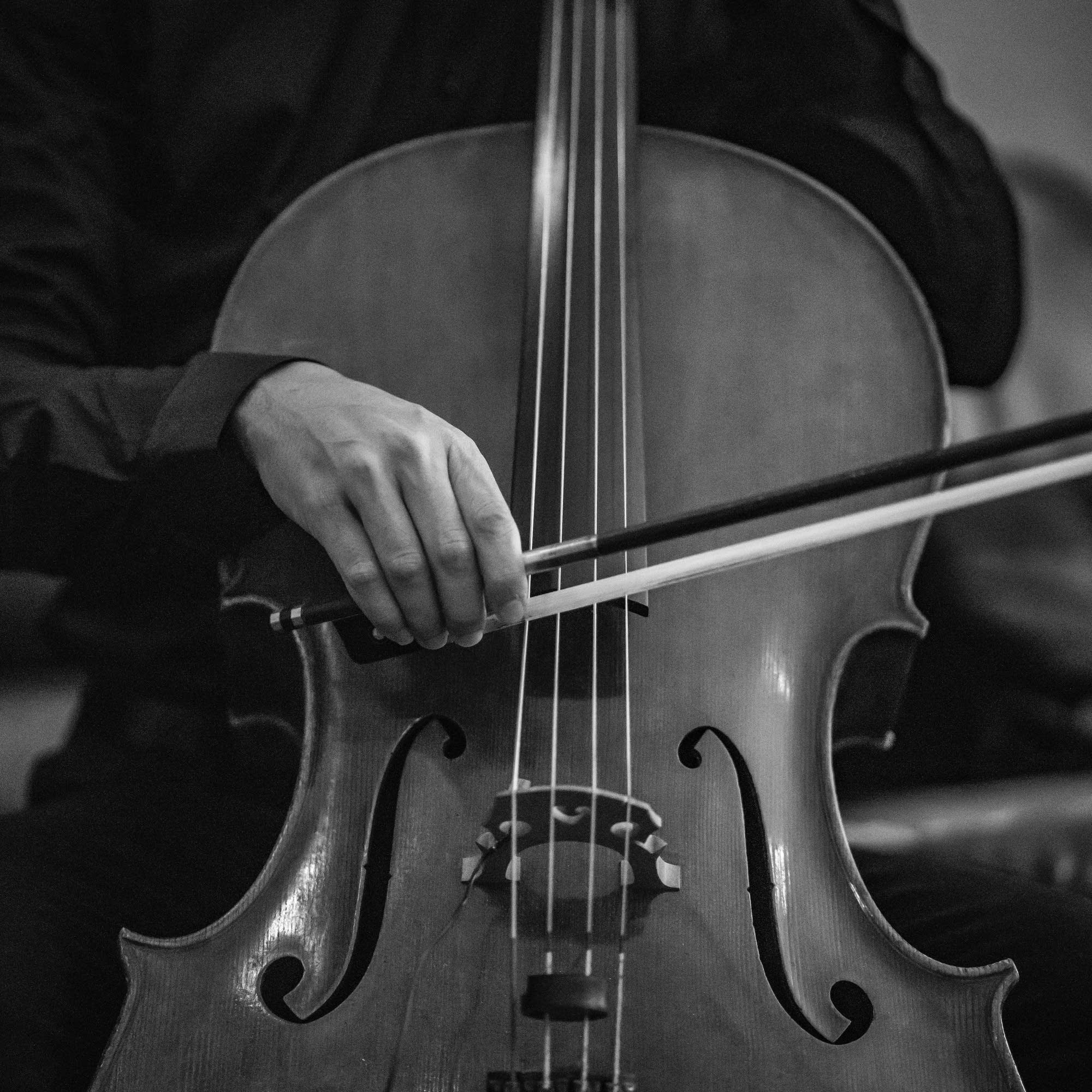

While we don’t know much about the exact origins of the cello, we do know that it was invented around the early 16th century and emerged in its modern form south of the Alps. Interestingly, the term “cello” is actually short for violoncello, which means “small large viol” in Italian and is a reference to the instrument’s complex history of changing sizes. In its earliest form, it was referred to as the bass violin, and in its current form, it is the second-largest string instrument behind the double bass. Before the 18th century, the cello was held upright by the cellist’s legs, but the pointed endpin was adopted after A.F. Servais, a prominent performer and tutor, needed help holding up his Stradivari and began using the device for support. The instrument’s strings were originally made out of sheep gut, but modern versions typically use metal wires. In the 17th and 18th centuries, five-string cellos were popular in Germany as well as in Dutch and Flemish regions, but four strings are standard today. Soon after they were invented, cellos were quickly absorbed into contemporary music. During the Baroque period, Bach composed many cello suites, while Haydn, Schumann, and Brahms included cellos in their concertos during the subsequent Classical and Romantic eras. The cello also made its way to other parts of the world, including China, where it has become a fixture in Chinese orchestras. Famous cellists like Yo-Yo Ma and Jacqueline du Pre helped further popularize the instrument in modern times and cellos are now used not only in classical compositions, but also in modern pop and rock renditions. Today, the cello remains a key instrument in many musical genres and is played all over the world.

Your go-to guide for weird history facts
Subscribe to the FREE daily email that makes learning about history fun.