

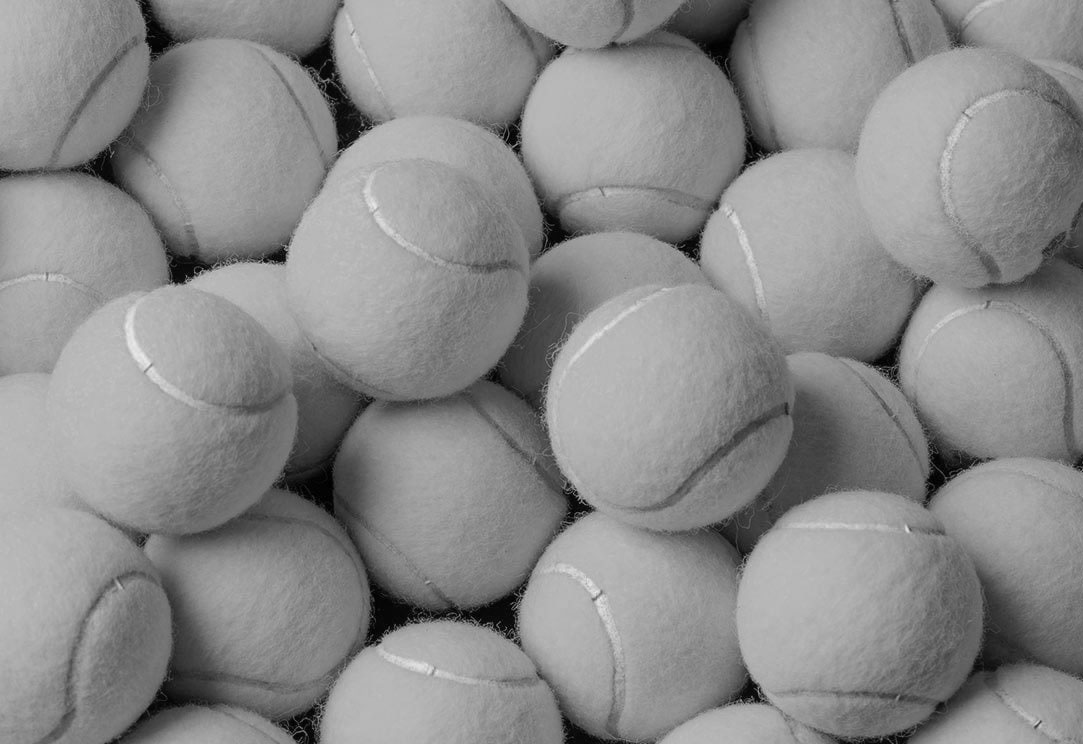

Tennis has its roots in a 12th century game played by French monks called jeu de paume. This eventually developed into “lawn tennis” in Victorian England, which eventually led to the creation of the modern sport of tennis that we know today. Over the years, the tennis balls used in these games were made from a variety of different materials, including leather stuffed with horsehair, cork, sheep’s wool, and even human hair! It wasn’t until the late 1800s that tennis balls were standardized to feature a rubber core covered in flannel. At the time, tennis balls were usually white or sometimes black for contrast. Then color TV was invented. In the 1960s, David Attenborough was working as a BBC executive and realized that white tennis balls were too difficult to see on color TV screens. In 1972, the International Tennis Federation responded to Attenborough's observations by adopting “optic yellow” as the official color for tennis balls during matches. The neon shade, which sits right between yellow and green on the color spectrum, was chosen because it was easy for both players and spectators watching on their television to see. Today, regulation tennis balls are still made in this highly visible neon shade and feature a responsive rubber core.

Your go-to guide for weird history facts
Subscribe to the FREE daily email that makes learning about history fun.