

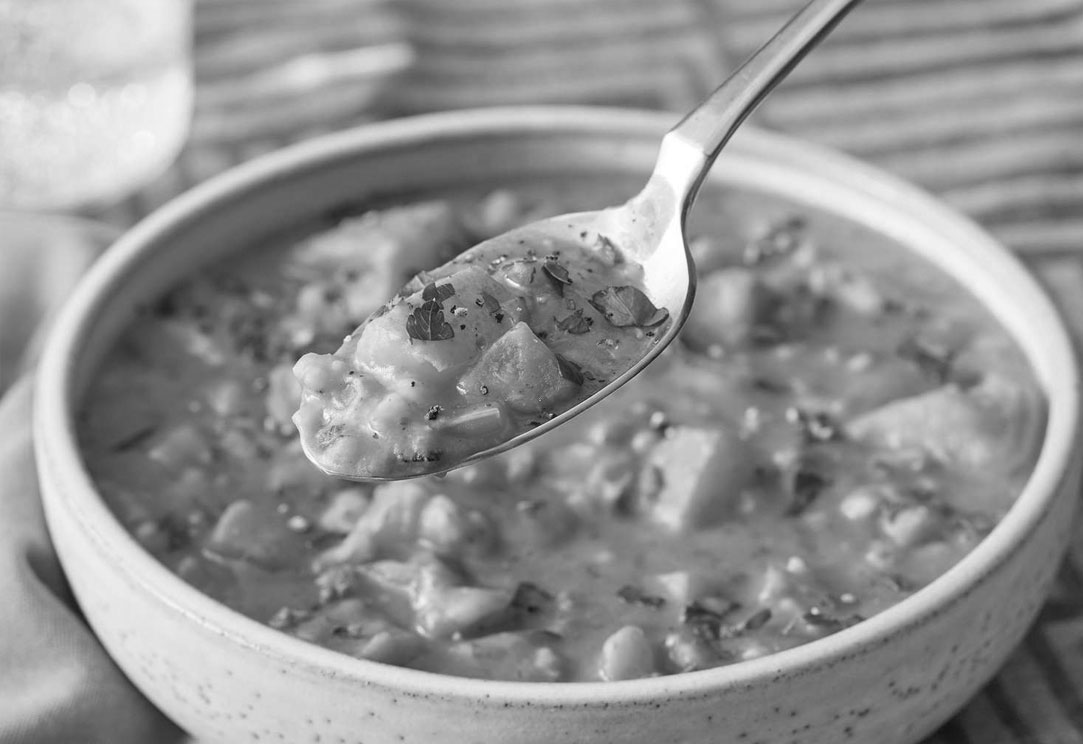

Split pea soup originated in ancient Greece and we have evidence that the soup was sold on city streets around the 4th or 5th century BCE. The ancient Romans learned how to make the dish from the ancient Greeks, but put their own spin on it and called it pultes pisanae; it was often used to feed the Roman army. Notably, peas have been part of the human diet for even longer and consumption is thought to date back to Asia as early as 10,000 BCE. From there, split peas traveled along trade routes and were incorporated into European diets. Similarly, the practice of drying peas is thought to have begun around 2000 BCE in China before later spreading throughout Europe. During the Middle Ages, split pea soup spread even further throughout Europe and continued to function as a staple in the European diet. Around this time, the dish was introduced to Sweden before spreading to the rest of Scandinavia. There, mustard and onions were added to the recipe for flavor. The dish also became popular in Germany, where it was given the name Erbsensuppe and took on a distinctive smoky flavor. The British added ham to the recipe in the 17th century, a practice that caught on in many other parts of Europe. In France, split pea soup became haute cuisine when it was refined into a dish called Potage Saint-Germain and served to King Louis XIV. When European colonists traveled to America, they brought split pea soup with them. Ham continued to be a key ingredient in most American-style split pea soup recipes, likely due to its established popularity in British recipes. Today, split pea soup is served in many parts of the world and is particularly popular during the winter months because it is hearty and warm.

Your go-to guide for weird history facts
Subscribe to the FREE daily email that makes learning about history fun.