

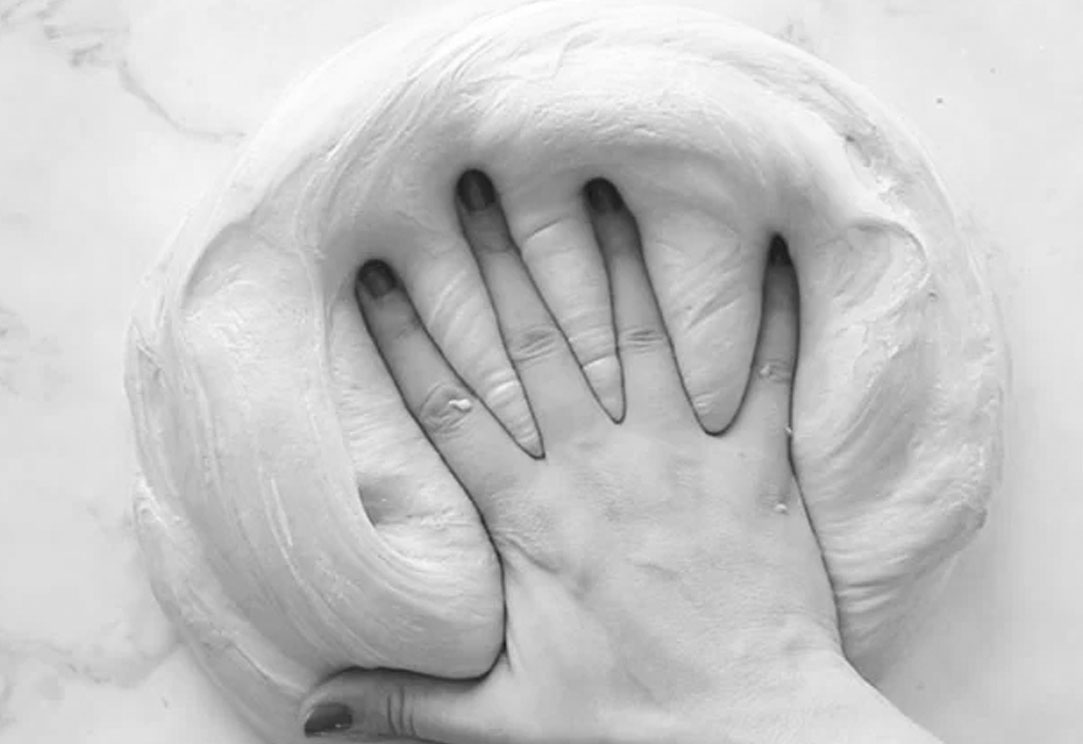

Slime as a toy was developed from an established chemical process that involved combining borax with guar gum or polymers to create a gelatinous, stretchable substance. In the 1960s, Wham-O released Super Stuff, a pink, moldable slime-like material. Then in 1976, Mattel introduced Slime, a neon green jiggly substance packaged in small plastic trash cans. The toy became instantly popular and many copycat products soon followed. Slime as a concept was integrated into many entertainment shows aimed at kids. Examples include the Ecto-plazm used in Ghostbusters and the bright green slimy substance dumped on participants during Nickelodeon’s Kids’ Choice Awards and shows like Double Dare in the 1990s. In the late 2010s and early 2020s, slime once again became popular as a toy. Unlike the lime-green versions of times past, modern-day slime is often colorful and filled with glitter or miniature toys. It’s often packaged in “cute” or aesthetically pleasing ways. Additionally, DIY slime-making has become a favorite pastime for many families. Today, slime remains a popular toy for kids and adults alike to enjoy.

Your go-to guide for weird history facts
Subscribe to the FREE daily email that makes learning about history fun.