

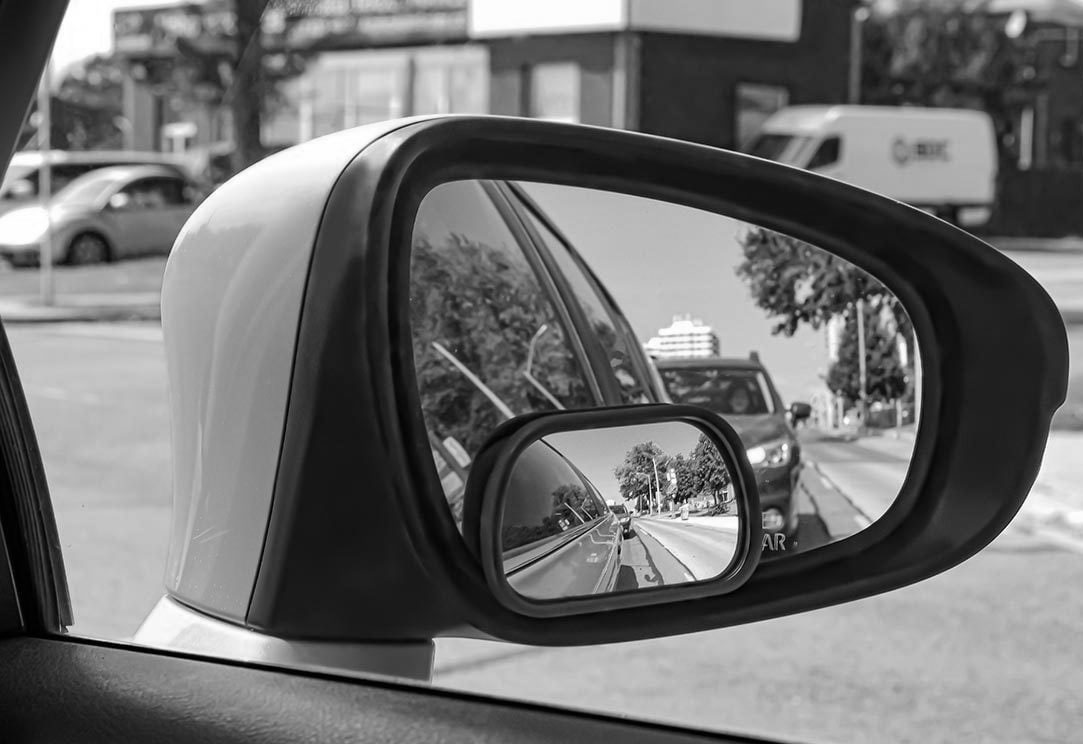

Did you know that cars didn’t originally come with side-view mirrors? Since the earliest roads were usually single-track or small two-lane roads, it wasn’t strictly necessary to be able to see around your car with mirrors. In fact, one of the first people to attach a rearview mirror to a car was racing driver Ray Harroun, who attached one to his Marmon “Wasp” before winning the first Indy 500 race in 1911. Later, an engineer named Elmer Berger applied for a patent for his “Cop-Spotter” door mirror in 1921, which, as the name suggests, was designed not so much with safety in mind, but to help drivers see cops along the road. Mirrors as optional add-ons for road cars became more popular after the passing of the Federal Highway Act of 1956, which led to the creation of modern multi-lane highways and made the ability to see around your car far more important than it was in previous years. The National Traffic and Motor Vehicle Safety Act of 1966 addressed automobile safety standards directly, and although the legislation didn’t require either rearview or side-view mirrors, they started to become more common at the time. Today’s regulations require a rearview mirror and a driver's side mirror, as well as a passenger's side mirror if the inside mirror does not meet specific field-of-view requirements. Most cars today come standard with an interior rearview mirror and two side-view mirrors. Additionally, modern side-view mirrors are typically technologically advanced with features such as lane assist, auto-adjustability, and even a self-defogging mode.
Your go-to guide for weird history facts
Subscribe to the FREE daily email that makes learning about history fun.