

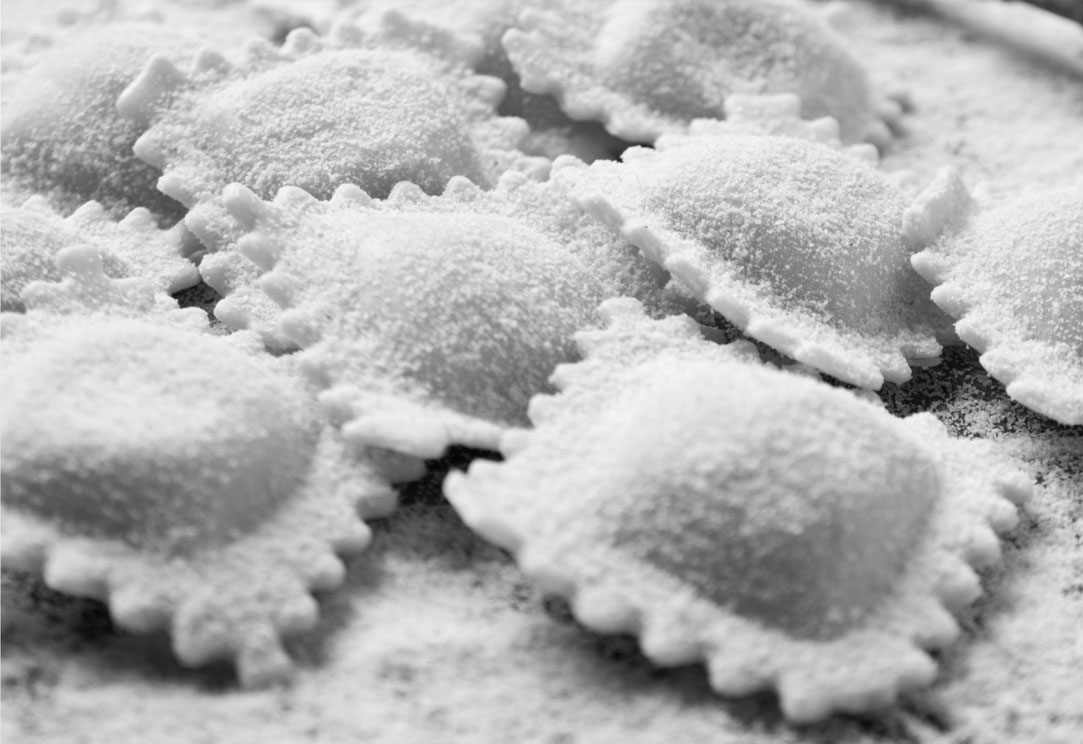

Ravioli may have existed in southern Italy as far back as the 9th century. It is thought that pasta itself first began to take root in Italy after Arab civilization invaded Sicily and introduced noodles from other countries to the region. Ravioli may have been derived from Chinese dumplings called jiaozi, which have been around since at least 200 BC. Societies in modern-day Iran and Turkey also made similar foods that may have influenced the creation of ravioli. Ravioli was frequently made without meat so that the dish could be eaten during Lent. Notably, ravioli was not served with tomato sauce until many years after tomatoes were first introduced to Italy because people were originally afraid of the new food. By the 14th century, early versions of ravioli were increasingly common throughout Italy, including in the Tuscan region. Ravioli was brought to the United States by Italian immigrants and canned ravioli became popular after it was given to soldiers as part of their rations during World War I. In the postwar period, Chef Boyardee created canned ravioli and it became popular shortly after hitting grocery store shelves, especially among children. Today, ravioli is immensely popular across Italy, the United States, and many other parts of the world.

Your go-to guide for weird history facts
Subscribe to the FREE daily email that makes learning about history fun.