

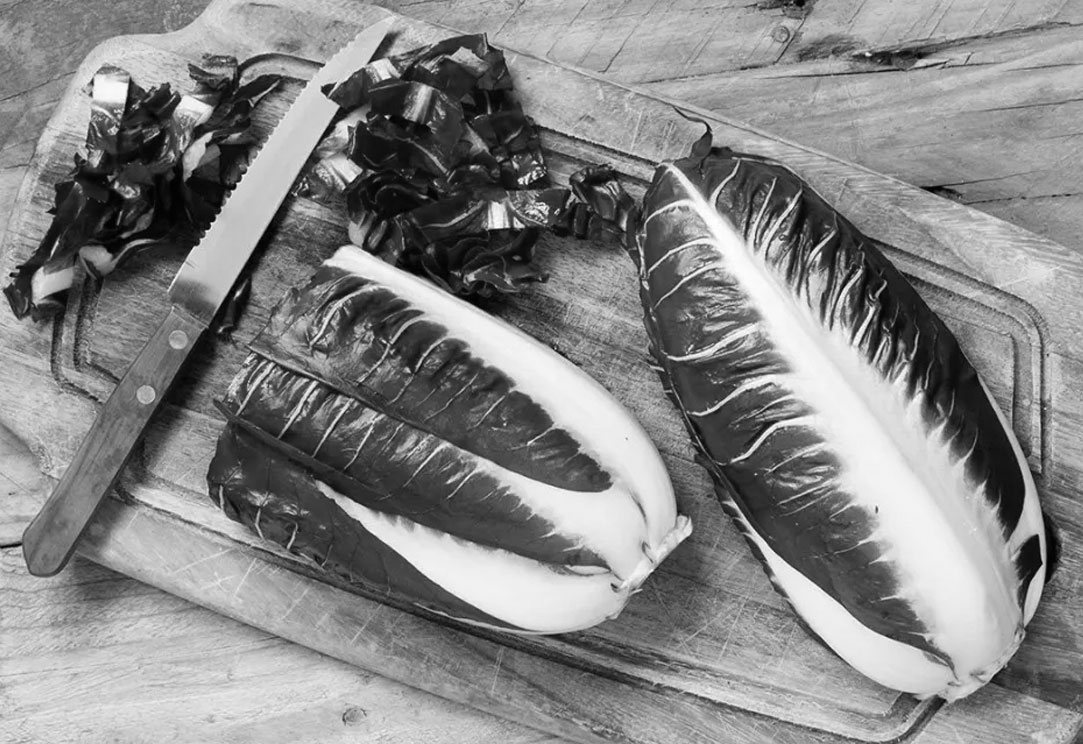

Radicchio originated in Italy and is a type of chicory, which has long grown wild across much of Europe. Until relatively recently, chicory was mostly used for medicinal purposes, although around the 18th century, the roots were harvested and roasted as a coffee substitute in the Prussian Empire. In fact, it wasn’t until the 20th century that Italian farmers began actively cultivating radicchio. Interestingly, nearly all of today’s varieties of radicchio were developed within the last 100 years! Radicchio quickly became a key part of Italian farming, especially because it is a cold weather crop. Not only does it provide fresh food during the winter, but the crop also helps to keep farmers in business during the leanest months of the year and protects the soil at a time when few other plants can be grown. Radicchio was first introduced to the United States in the 1980s at the same time that bagged salad mix debuted (radicchio is often included in bags of mixed salad greens). At the time, only one variety of radicchio was available — Rossa di Chioggia — which closely resembled purple cabbage. However, in recent years, radicchio has experienced an explosion in popularity in the United States. Not only are the bitter leaves commonly used in salads, but chefs have been getting increasingly creative with impressive preparations, such as charred and roasted radicchio served with flavorful sauces and other ingredients. Today, there are a variety of radicchio cultivars available. In fact, radicchio can be found at grocery stores and farmers markets across the United States, as well as in its native Italy and other parts of Europe.

Your go-to guide for weird history facts
Subscribe to the FREE daily email that makes learning about history fun.