

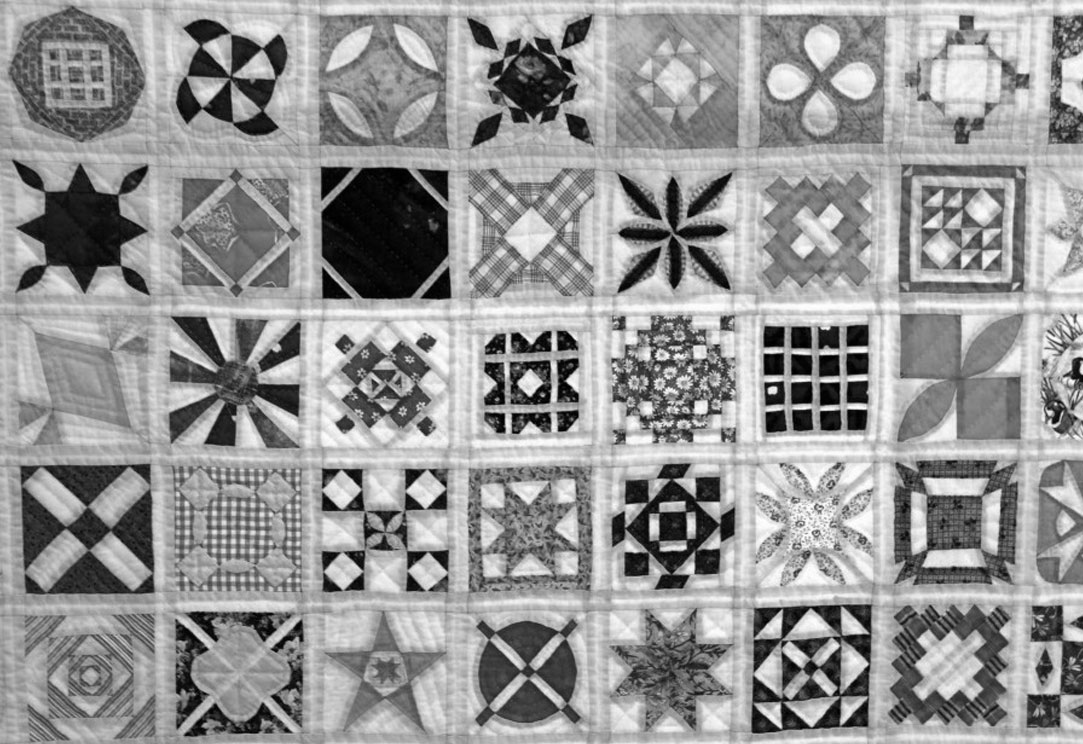

Quilts date back to ancient Egypt, where they were used as garments. One of the earliest pieces of evidence we have is an ivory carving from the 35th century BC that depicts the Pharaoh of the Egyptian First Dynasty wearing a quilted garment. Quilts were also used as floor coverings in ancient Mongolia. Europeans first began wearing quilted fabrics during the Crusades after observing Turkish soldiers wearing quilted garments underneath their armor. Decorative quilts date back to the 14th century. They became an art form in places like Italy and soon spread to Britain, where, in the Victorian era, “crazy quilts” made from discarded fabric scraps and featuring no discernable pattern became wildly popular. Quilting has long played a role in many cultures around the world; for example, the Karnataka region of India is famous for its quilt-making. Quilts were first made in America by the Puritans, who used them to keep warm. But in the 19th century, American quilt-making became more artistic. Around this time, Baltimore quiltmakers created a style known as Baltimore Album Quilts, or “friendship quilts,” bringing a structured social dynamic to the practice. Similar traditions existed in other parts of the world, too, including China, where a community will still often make a Bai Jia Bei, or 100 Good Wishes Quilt, to gift to a couple expecting a baby. Quilting also played a key role in the 1830s abolitionist movement in America. Abolitionists frequently embroidered anti-slavery poems and messages into quilts and sold them. Furthermore, quilting has a long history in the Black community. For example, the quilting community of Gee’s Bend, Alabama is celebrated for their quilt work and its members played a key role in the preservation, popularization, and resurgence of quilting in America; notably, many of the quilters are direct descendants of enslaved people who labored on a nearby plantation. Quilts have been used to bring communities together, document history, share well-wishes, preserve family stories, and more. Today, quilting is considered a textile art form that is still practiced all over the world and many exemplary quilts are now displayed in museums.

Your go-to guide for weird history facts
Subscribe to the FREE daily email that makes learning about history fun.