

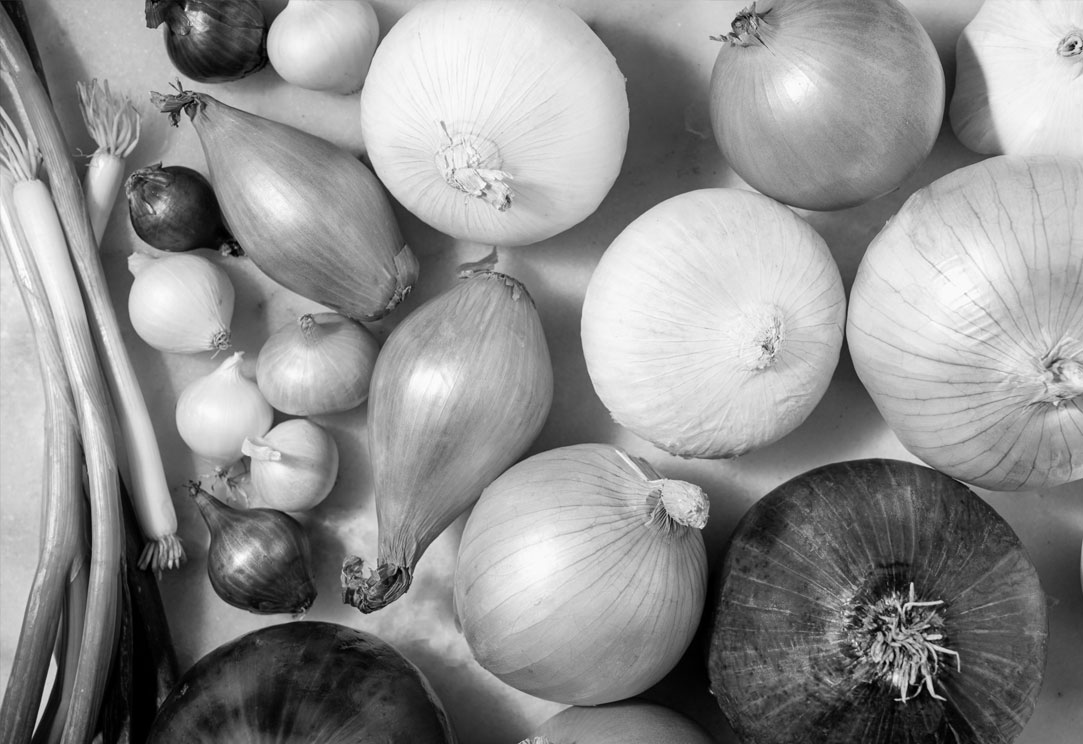

Onions are a surprisingly ancient food ingredient. In fact, onions are mentioned in the world’s oldest cooking tome, a Babylonian cuneiform cookery book in Yale University's collection. This means that the Babylonians were cooking with onions roughly 4,000 years ago. However, there’s evidence that onions were used in cooking even earlier than that. According to genetic analysis, food historians believe that onions originated in central Asia. This means they’d already traveled far from their area of origin by the time the Babylonians had begun to use them. According to food historian Laura Kelley, there is even evidence that onions were being eaten in Europe as far back as the Bronze Age. She also notes that the early use and spread of onions may have been helped along by the fact that they have very pretty flowers, so early humans may have noticed them for their blooms, then realized they could be eaten. Additionally, onions are easy to grow, so many cultures were successfully able to cultivate them in their own climates. In fact, onions were even traded along the Silk Road as far back as 2000 BC. Today, onions are considered the world’s most ubiquitous ingredient and are used in nearly every cuisine. In fact, they’re so popular that there’s not much of a modern onion trade — that’s because most countries grow and consume their own supply. Onions are especially popular in China, India, and West African countries.

Your go-to guide for weird history facts
Subscribe to the FREE daily email that makes learning about history fun.