

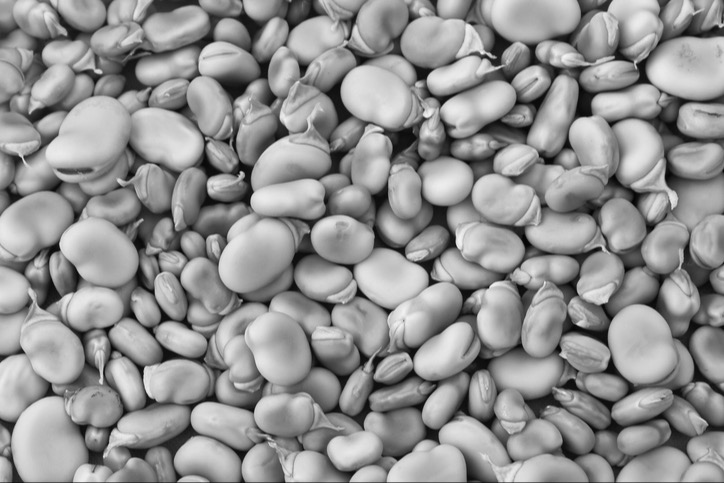

Lima beans (P. lunatus) originated in Peru and are in fact named for Lima, although the names of the city and the foodstuff are pronounced differently. They played a key role in the Moche culture, in which they were originally used as a food source but were later restricted for the upper classes to use as a status symbol. The beans were also used in ceremonies and considered symbolic of both war and eternal life. Lima beans, along with other types of legumes, were one of the “three sisters” of Native American cuisine. In the 17th century, Native Americans taught the struggling colonists how to make msickquatash, which later became known to European settlers as "succotash." George Washington even grew lima beans at Mount Vernon. In 1890, a Pennsylvanian named Asa Palmer discovered the first bush lima bean plant growing in his garden and sold the seeds to W. Atlee Burpee. (Previous varieties had all been pole plants that required stakes for support.) Burpee’s seed company then developed a variety of lima bean plant known as the Fordhook, which became extremely popular. Canned lima beans were a staple in the United States in the 20th century and gave lima beans a bad reputation, but today, they are often prepared thoughtfully and play a key role in classic dishes like succotash.

Your go-to guide for weird history facts
Subscribe to the FREE daily email that makes learning about history fun.