

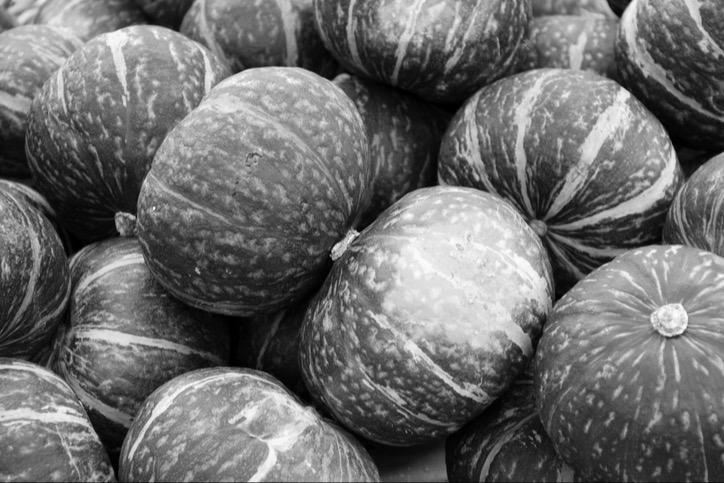

Squash has been cultivated for over 8,000 years and has its origins in Mesoamerica. Notably, it has been consumed by Indigenous Peoples throughout the Americas for millennia. When European colonists arrived, they were introduced to the new crop; in New England, Native Americans famously taught the settlers how to grow squash and other staples to help them survive the region's harsh winters. Like other varieties, kabocha squash was first grown in the Americas, but after the arrival of the Europeans, it was introduced to other parts of the world via trade routes. More specifically, Portuguese sailors brought kabocha squash to Japan in the 16th century. The route passed through Cambodia, which gave rise to the name Camboja abóbora, which means “Cambodian pumpkin” in Portuguese. The two words were eventually morphed together form the vegetable’s current name. Kabocha squash quickly became a staple in Japan as well as in nearby nations like Korea and Thailand. Today, kabocha squash is popular in the United States during harvest season and remains a staple in many cuisines around the world.

Your go-to guide for weird history facts
Subscribe to the FREE daily email that makes learning about history fun.