

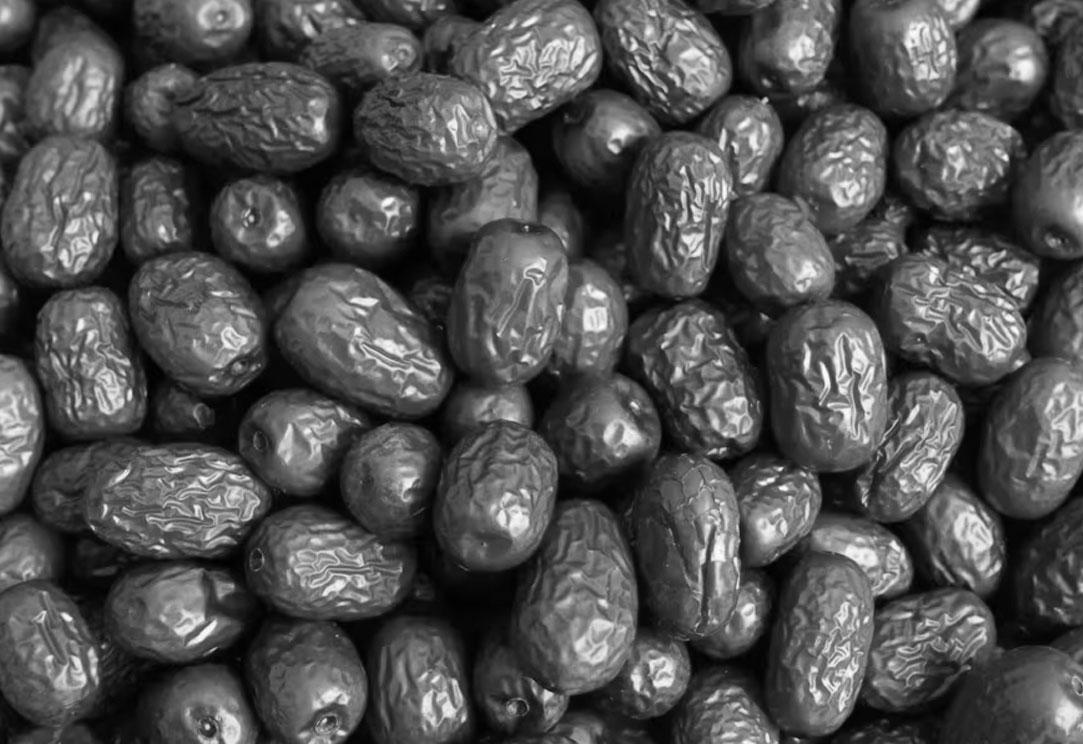

Jujube fruit, also known as the Chinese date, red date, or Tsao, is native to China, where it has been cultivated for over 4,000 years (and has grown wild near the Yellow River for even longer). The fruits, or drupes, have long played an important role in traditional Chinese medicine and have also been consumed as food for many years. Jujubes are also part of medicinal and culinary traditions in Korea and Japan, as well as parts of Southeast Asia. They can be eaten fresh or dried and are often made into candied fruits, juices, jams, wines, teas, and more. Jujubes eventually spread to Europe through trade and were first introduced to the United States from there by Robert Chisholm. The first jujube tree was planted in Beaufort, North Carolina in 1837. In 1876, G.P. Rixford brought jujube seedlings over from France and introduced them to California and nearby states. The first group of commercial cultivars were introduced to the Plant Introduction Field Station at Chico, California by agricultural explorer Frank N. Meyer in 1908. From there, the plants were distributed to other USDA stations and, eventually, jujubes were cultivated in the American Southwest, where the climate was favorable to their development. While jujubes aren’t yet a phenomenon in the United States, their popularity is on the rise, and they are most frequently used for baking, making jams, or simply enjoyed as a dried fruit snack.

Your go-to guide for weird history facts
Subscribe to the FREE daily email that makes learning about history fun.