

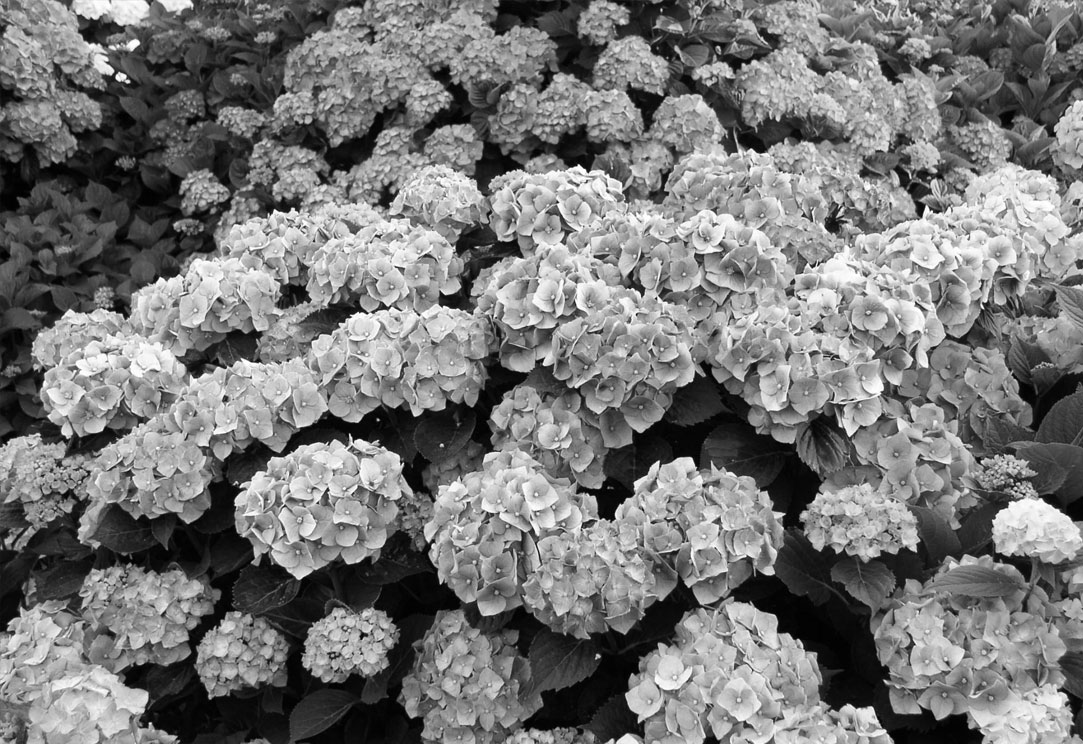

There are many wild and cultivated species of hydrangeas, each with their own unique history. One popular variety, Bigleaf Hydrangea (Hydrangea macrophylla), is native to Japan. Others, such as Smooth Hydrangea (H. arborescens) and Oakleaf Hydrangea (H. quercifolia) are native to the southeastern United States and have a history of medicinal use in Indigenous communities. These varieties were introduced to colonists in the 1730s by John Bartram, a Quaker from Philadelphia who traveled the southeastern region, catalogued local flora, and gathered seeds. He then grew the seeds at his farm (now Bartram’s Garden), which is widely considered the first botanical garden in the United States. Smooth Hydrangea proved relatively easy to grow and became quite popular; both George Washington and Thomas Jefferson cultivated it on their estates. In the late 1700s, the Japanese variety Hydrangea macrophylla was introduced to the U.S. and Britain, though it was a rarity at the time. Most hydrangea varieties were originally only available to the elite, but as they grew in popularity, they became more accessible and were soon a staple in American gardens. Interestingly, in the 1800s language of flowers, hydrangeas symbolized arrogance and vanity, and men sometimes sent them to women after being rejected. Despite this association, hydrangeas remained popular in gardens well into the 20th century. In fact, by the 1950s, they had become so widespread that they were seen as old-fashioned and fell out of favor. Then in the late 1990s, Martha Stewart saw a display of hydrangeas at the San Francisco Flower Market and included them in her magazine, reigniting interest in the plants. Today, hydrangeas remain popular in the United States and are also prized in locations as far apart as Japan and the Azores.

Your go-to guide for weird history facts
Subscribe to the FREE daily email that makes learning about history fun.