

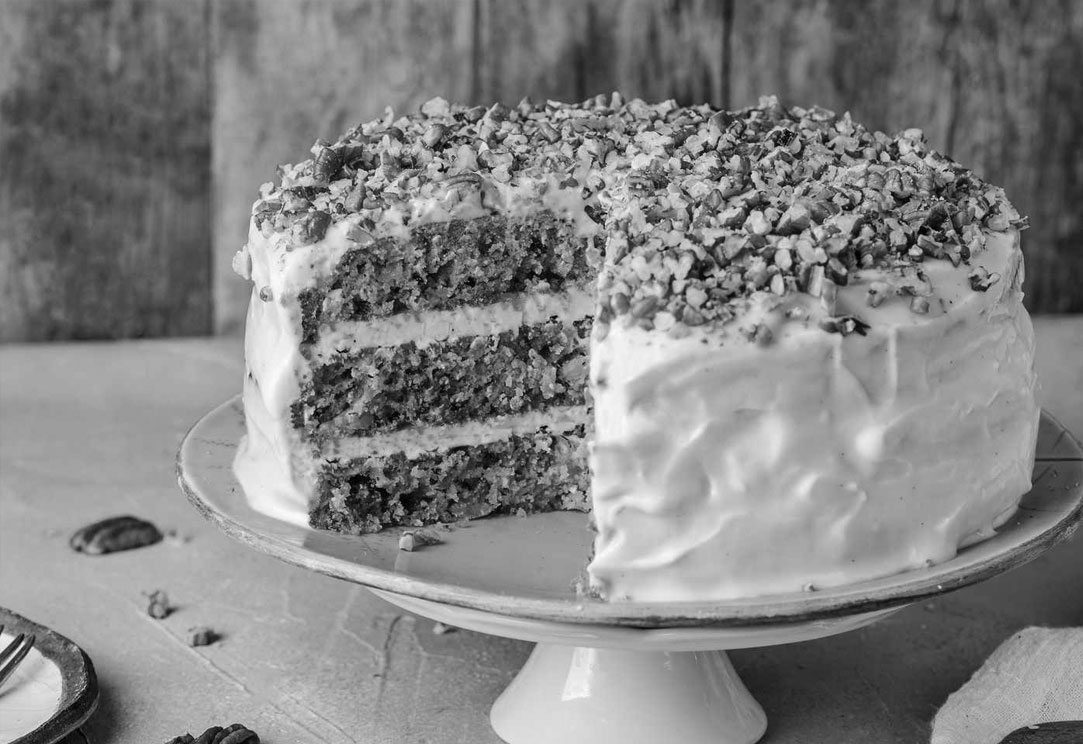

Jamaica became an independent nation in 1962 after centuries of British colonial rule and exploitation during the transatlantic slave trade. The nation’s economy had previously been based on the sugar industry, which had long relied on slave labor. In search of a new national economic force, leaders began promoting tourism and building an image of island life that could help attract tourists. As part of these efforts, the Jamaica Tourist Board took two of the island’s main fruits, bananas and pineapples, and created a recipe using both. Bananas and pineapples were blended with vanilla, nutmeg, and cinnamon to create a light, airy sponge cake that could be layered with a dairy-laden frosting and would appeal to foreigners while still showcasing the island’s natural resources. (Indeed, the cake was not characteristic of traditional Jamaican cuisine, but was instead more closely aligned with the island’s British colonial past and was specifically aimed at appealing to tourists rather than citizens.) The recipe was distributed to Jamaican newspapers and given the name “hummingbird cake” or "Dr. Bird Cake" in honor of the island’s national bird. The dessert became especially popular in the Southern United States. (In fact, a recipe for hummingbird cake that was submitted to Southern Living by a North Carolina resident in 1978 is still the magazine’s most popular recipe to date!) While hummingbird cake remains very popular outside of Jamaica and among tourists, classic Jamaican treats like gizzadas and toto are still much more popular among residents of the island today.
Your go-to guide for weird history facts
Subscribe to the FREE daily email that makes learning about history fun.