

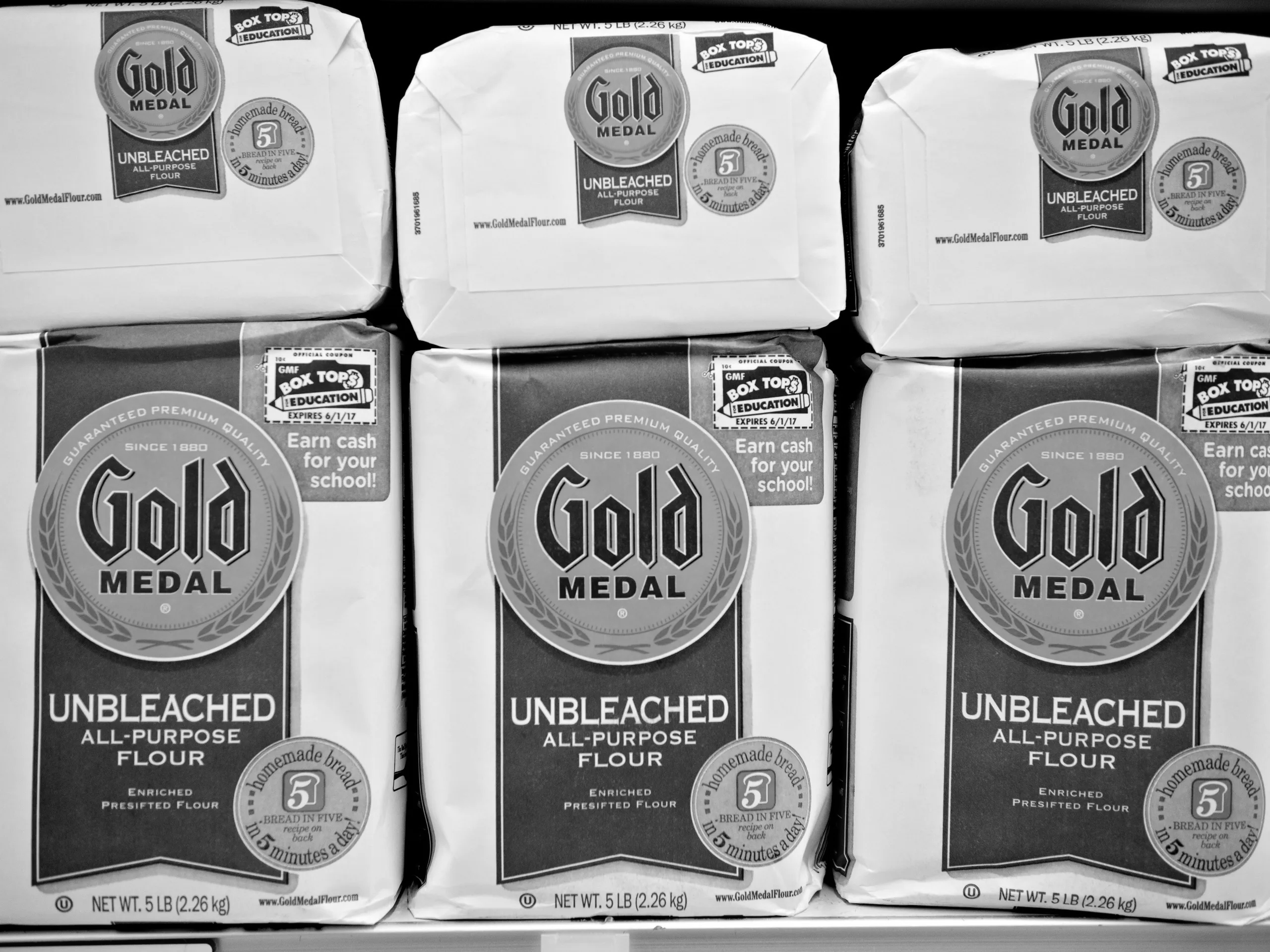

In 1866, Cadwallader C. Washburn built a mill on the Mississippi River at St. Anthony Falls in Minneapolis, Minnesota and began making flour. In 1878, the original building was destroyed by a catastrophic flour dust explosion that took 18 lives. The mill was rebuilt in 1880 with safer, more advanced machinery and operations expanded. In 1880, Washburn took his flour to the First Millers International Exhibition in Cincinnati, Ohio, where it earned three gold medals, one of which was for his Superlative flour brand. Afterwards, Washburn began using the Gold Medal name for his top-grade flour, giving rise to the Gold Medal Flour brand, which operated under the Washburn-Crosby Company (which later became General Mills). In 1905, packaging shifted from heavy barrels to hand-sewn fabric bags. (Interestingly, customers often repurposed these to make things like dresses and tea towels.) Two years later, the company’s iconic, long-running slogan, “Eventually…Why Not Now?” was rolled out. A few years later, the company’s fabric packaging was replaced by small paper bags. In 1925, the company began testing flour in kitchens with dedicated home economists. In the 1920s, the company began to run advertisements on radio programs and the Gold Medal Home Service Department even began answering customer questions about cooking and baking directly. (Interestingly, this practice led to the creation of Betty Crocker!) In the 1940s, Gold Medal Flour was enriched with vitamins and minerals like calcium and iron as part of a joint effort with government authorities to help Americans suffering from inadequate diets. In 1946, after the government issued War Food Order Number 144 during World War II, which required millers to use the coarser, darker parts of the wheat kernel to stretch supply, the Gold Medal trademark was removed from the packaging, but it returned when the regulation was rescinded in 1947. Gold Medal Flour was popular throughout the second half of the 20th century and over time, new products were added to the lineup, including whole wheat, organic, and self-rising varieties. Today, Gold Medal Flour remains a popular brand and is available at grocery stores throughout the country.

Your go-to guide for weird history facts
Subscribe to the FREE daily email that makes learning about history fun.