

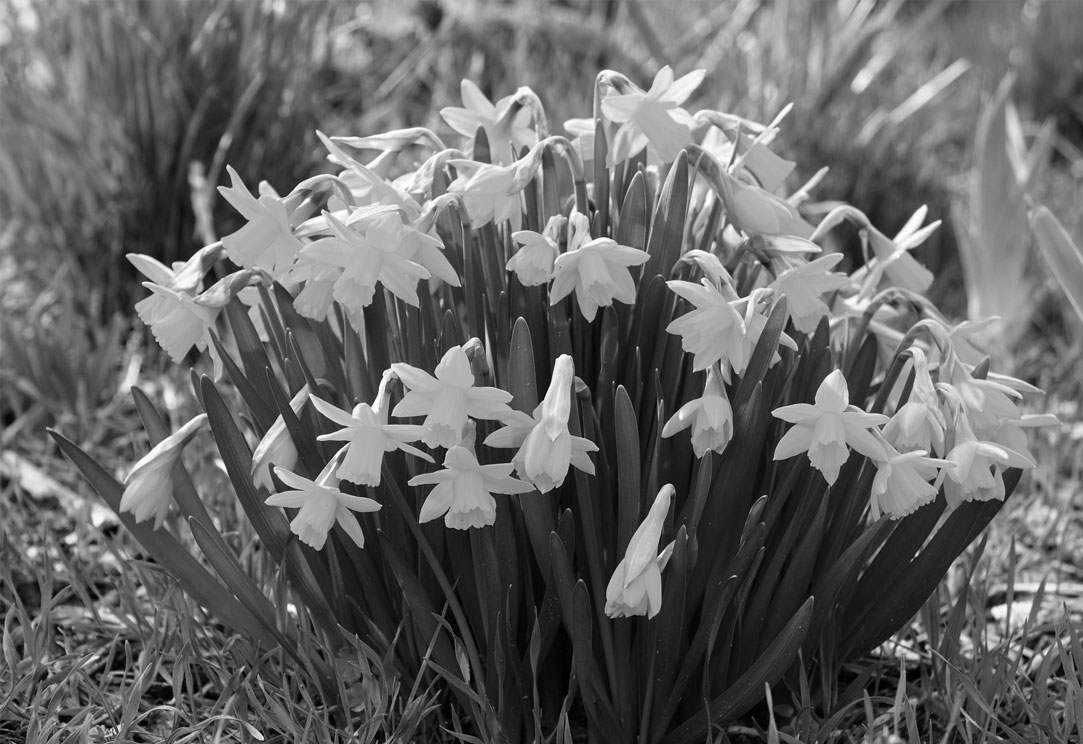

Daffodils (Narcissus) get their name from the Greek word narco, which is likely a reference to the plant’s toxicity. The plant’s botanical name is also a reference to Greek mythology and was likely chosen because the drooping flowers resemble Narcissus bending over to see his reflection in a pool of water. Daffodils are thought to be native to Spain and Portugal, where the greatest variety of species can be found. The Romans were also known for planting daffodils in memory of loved ones or soldiers who died in battle. Daffodils are thought to have been brought from the Iberian Peninsula to Britain by the Romans. Until the 19th century, all daffodils were either wild species or naturally occurring hybrids. Then Rev. George Herbert Engleheart, widely considered the father of the modern daffodil, began a prolific period of cultivating daffodils. He registered 720 new species between 1882 and 1923, with N. poeticus being the most well-known. Daffodils also captivated various artists and poets, including William Wordsworth, who famously immortalized the flowers in his famous poem, “Daffodils.” Today, there are over 27,000 cultivated varieties of daffodils; most are yellow, with some rare cultivars showcasing white or orange petals. The UK is the world’s largest grower of daffodils, but the flowers are popular in many parts of the world, especially in the United States.

Your go-to guide for weird history facts
Subscribe to the FREE daily email that makes learning about history fun.