

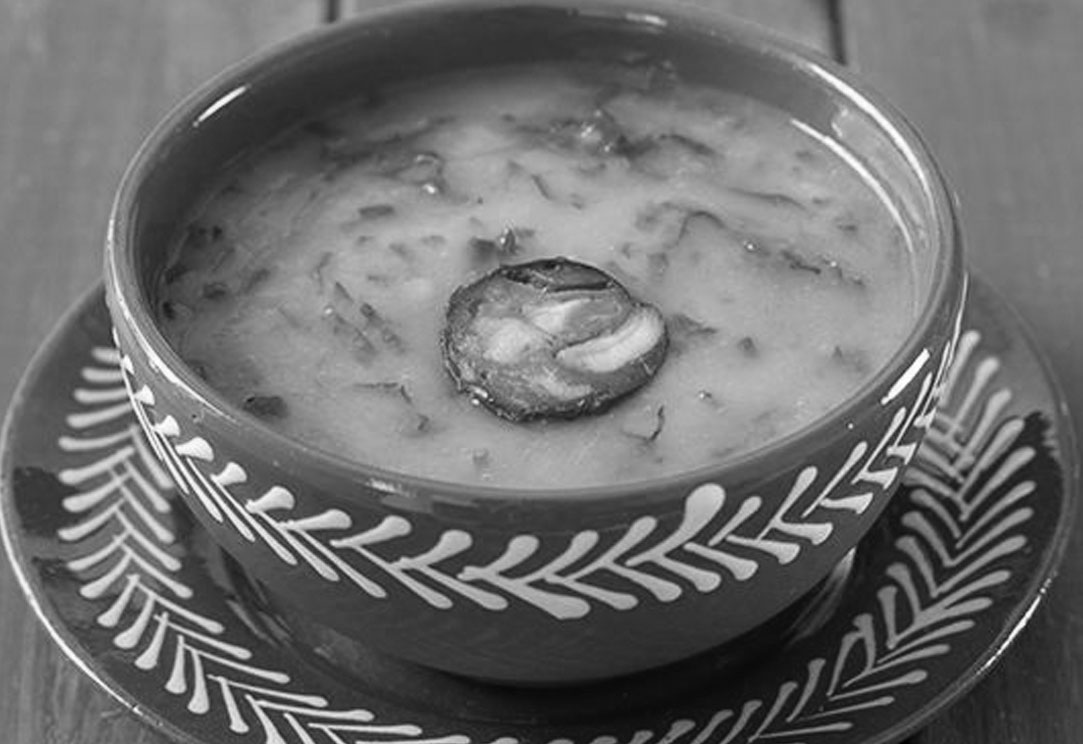

This popular Portuguese soup dates back to the country’s northern province of Minho in the mid-15th century. There, farmers would routinely rely on their surplus of simple vegetables like starchy potatoes and leafy greens to feed the community during the winter. Caldo verde was born from this necessary practice, as it combined economical, winter-hearty ingredients like couve galega (Portuguese kale), potatoes, and slices of sausage (usually either linguiça or chouriço). The name caldo verde means “green broth,” a reference to the thinly sliced greens that give the soup its color. The soup has remained an important part of Portuguese cuisine both on the mainland and on the Azorean islands for centuries. Today, it is widely considered Portugal’s national dish and is enjoyed in home kitchens and restaurants across the country, as well as in other areas of the world with large Portuguese immigrant populations.

Your go-to guide for weird history facts
Subscribe to the FREE daily email that makes learning about history fun.