

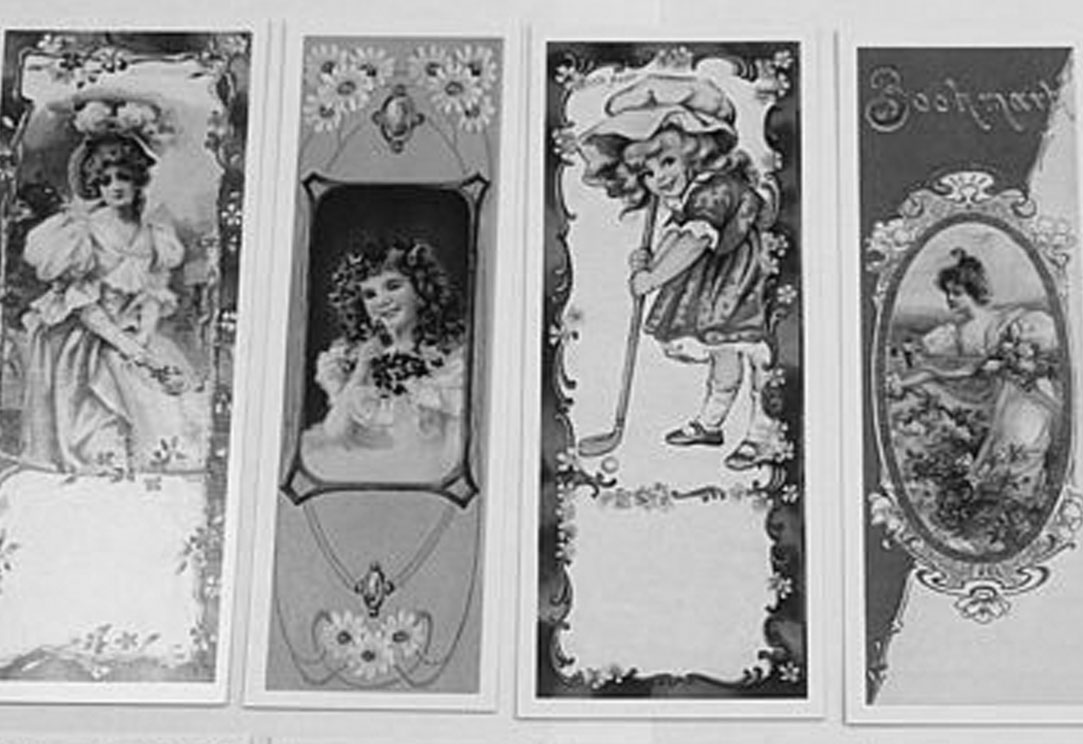

Historians believe that bookmarks have been around in some form or another since the introduction of the codex. Bookmarks were mentioned in St. Augustine’s Confessions, which dates to around 400 AD, and the earliest known bookmark is a leather strip attached to an Egyptian monastic codex from the 6th century. In the Middle Ages, bookmarks were known as "registers" (“registrum corula”) or "bookmarkers" and were especially important before page numbers were added to books in the late 16th century. In the 15th century, many bookmarks took the form of narrow strips of parchment or vellum and were attached to the edges of different sections of a book, similar to modern-day tabs. Other 15th century bookmarks took the form of a ribbon attached to the book’s binding; these are still popular today, particularly in keepsake books and religious texts. Another type of bookmark featured a rotating disk to help readers recall not just the page, but the specific column they’d stopped reading at. As books became more affordable and accessible in the mid-1800s, the “loose bookmarker” gained popularity. These could take the form of either a loose strip of paper or a purpose-made bookmark similar to those we still use today. (The practice of “dog-earing” books also cropped up around this time.) As loose bookmarks became more and more popular, many companies and groups began to use bookmarks to advertise products or share information. Today, bookmarks remain popular; many bookstores still give away free paper bookmarks as a form of advertising and keepsake bookmarks are still often given as gifts.
Your go-to guide for weird history facts
Subscribe to the FREE daily email that makes learning about history fun.